Bean-to-Cup Coffee Machine Leaking Water – Causes and Fixes
A puddle under a bean-to-cup coffee machine is one of the most common coffee machine faults. The good news: most leaks come from a small number of places, and several of them can be fixed without opening the machine. This guide covers Gaggia, Saeco, Philips, De’Longhi and similar automatic machines.
Step 1 — Find Where the Water Comes From
Dry the machine and the worktop, put a sheet of kitchen paper underneath, and make one coffee. Then look at where the paper is wet:
| Where it leaks | Most likely cause |
|---|---|
| Front, under the drip tray | Drip tray overfull, cracked, or not pushed fully home |
| Back, under the water tank | Tank valve or its seal, or a cracked tank |
| Inside the service door, around the brew unit | Dirty or worn brew unit seals, or brew unit not seated correctly |
| Only when steaming or making hot water | Steam wand O-rings or steam valve |
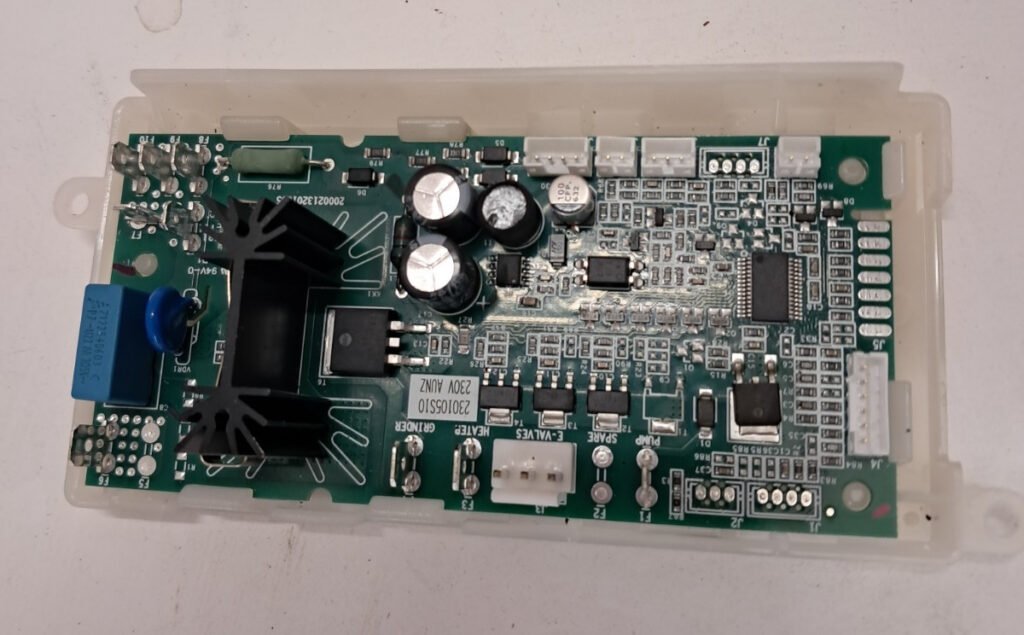
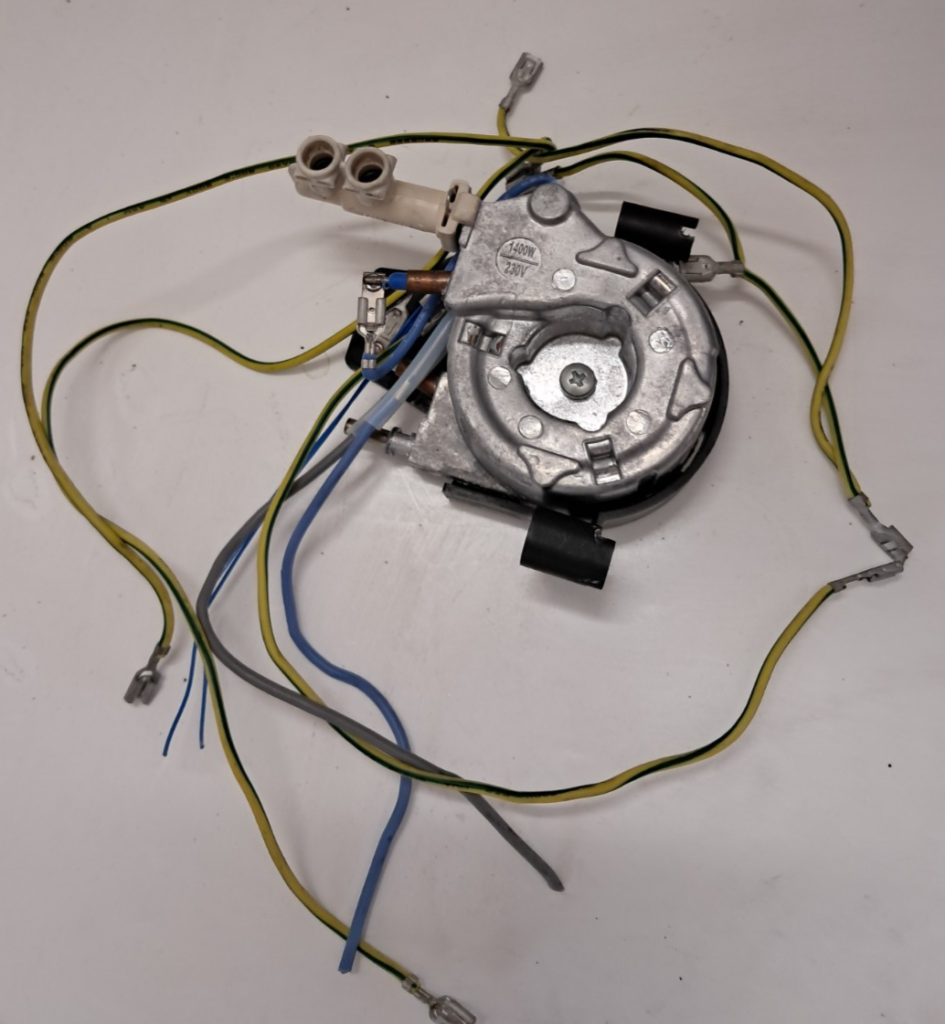
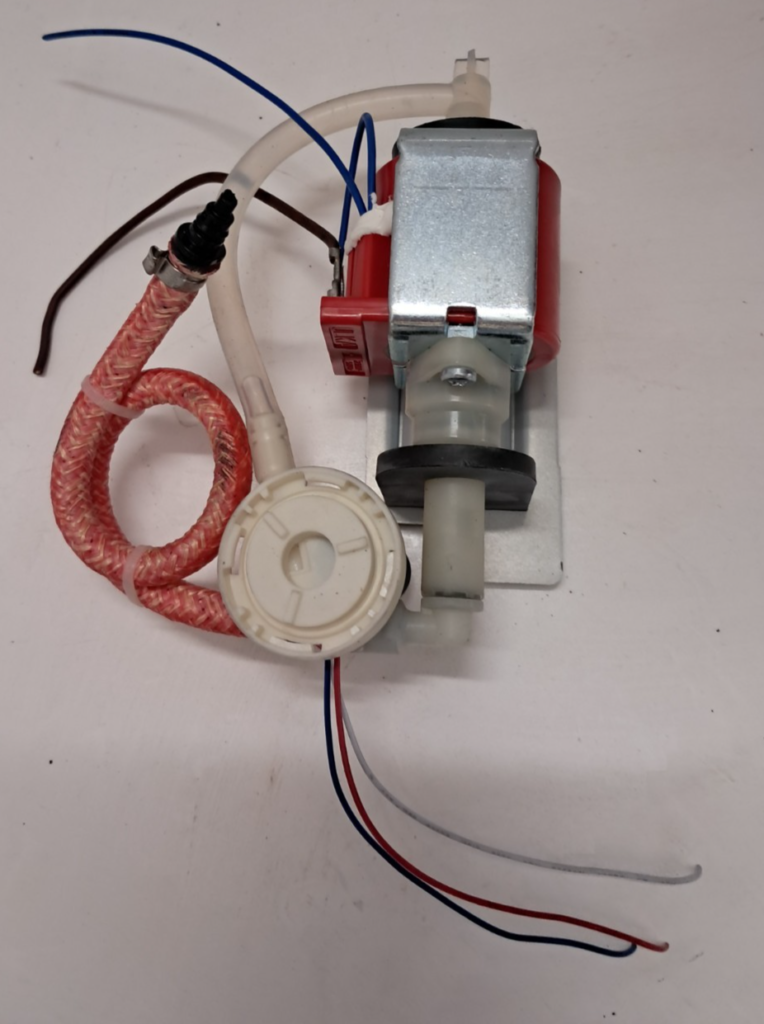
| Underneath, even when not in use | Internal hose, fitting, pump or boiler seal — needs the machine opened |
Drip Tray
Many machines rinse at power-on and power-off, so the drip tray fills faster than people expect. Empty it, check it for cracks (hold it up to the light, filled with water, over the sink), and make sure it clicks fully into place. On many machines the tray also closes a contact that tells the machine it is fitted.
Water Tank
The valve in the bottom of the tank opens when the tank is seated. If its seal is hard, cracked or has a coffee or scale deposit on it, water drips out at the back. Remove the tank, clean the valve and the seat in the machine, and check the seal. Seals and tanks are inexpensive spare parts. A hairline crack in an old tank is also common.
Brew Unit
On machines with a removable brew unit, a leak inside the service door usually means:
- Coffee residue on the seals stops them closing tightly — rinse the unit under warm water (no soap)
- Dry, hardened O-rings — lubricate with food-safe silicone grease, or replace them if they are cracked or flattened
- The unit is not locked in place — refit it until it clicks
Our coffee machine maintenance guide covers brew unit cleaning step by step.
Steam Wand
If water or steam escapes around the wand joint while steaming, the O-rings in the wand connection are usually worn. They are cheap and quick to replace on most machines. If the wand drips constantly when not in use, the steam valve may be scaled or worn.
Internal Leaks
If water appears underneath without any obvious source, the leak is inside. Common points are:
- Hose connections that have hardened or slipped off
- Scale blocking a pipe, which raises pressure until a joint gives way
- Pump or boiler seals
- The overpressure valve, which releases water into the drip tray when the system is blocked by scale
Scale is behind many internal leaks. Descaling on schedule with the correct descaler is the best prevention.
See also our Gaggia Cadorna Error 02 guide.
Related Guides
- Grinder not working
- Weak or watery coffee
- Machine won’t turn on
- Milk frother not frothing
- DeLonghi Magnifica not making coffee
- Pump buzzing but no water
- Gaggia Cadorna Error 02
- Coffee machine maintenance guide
Coffee machine parts – tested and in stock
Every part below is tested before it is listed and comes with a 30-day working warranty.